GoGreen Summit 2027
Conference Tracks

Call for Papers

Eight SDG-aligned conference tracks, each mapped to the United Nations Sustainable Development Goals it advances. Choose the track that best fits your research.

Conference Tracks

Topics of Interest for Submission

include, but are not limited to:

Explore our session tracks, each created to offer a distinct learning opportunity during the conference. Discover subjects that pique your interest and encourage lively conversations among everyone.
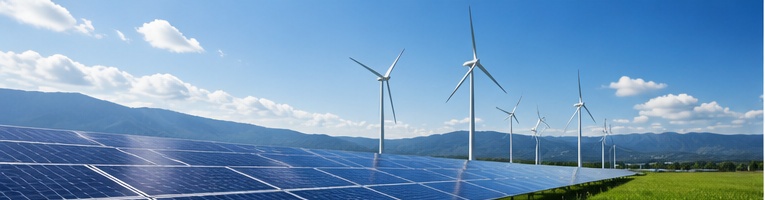
Renewable Energy and Clean Energy Technologies
SDG 7 - Affordable and Clean Energy SDG 9 - Industry, Innovation and Infrastructure SDG 13 - Climate Action

Affordable and Clean Energy·Industry, Innovation and Infrastructure·Climate Action

Track 01

Renewable Energy and Clean Energy Technologies

Research Topics

  • Solar, wind, hydropower, geothermal, and other renewable energy technologies
  • Energy storage, battery technologies, and grid integration
  • Green hydrogen, bioenergy, and sustainable fuels
  • Smart grids, energy efficiency, and demand-side management
  • Low-carbon energy systems and decarbonisation technologies
  • Carbon capture, utilisation, and storage
  • Renewable energy policy, deployment, and sustainable energy transitions

3 SDGs · 7 research topics View Track Details
Climate Change, Adaptation and Resilience
SDG 9 - Industry, Innovation and Infrastructure SDG 11 - Sustainable Cities and Communities SDG 13 - Climate Action

Industry, Innovation and Infrastructure·Sustainable Cities and Communities·Climate Action

Track 02

Climate Change, Adaptation and Resilience

Research Topics

  • Climate modelling, climate projections, and impact assessment
  • Extreme weather events, floods, droughts, landslides, and hydro-meteorological hazards
  • Climate adaptation, disaster-risk reduction, and community resilience
  • Peatland hydrology, degradation, fire prevention, and restoration monitoring
  • Watershed assessment and satellite-based environmental monitoring
  • IoT-enabled flood, rainfall-anomaly, and drought early-warning systems
  • Earthquake and tsunami early-warning systems in the context of disaster-risk reduction
  • Coastal erosion, sea-level rise, land subsidence, and urban inundation
  • Climate-resilient infrastructure and adaptation planning

3 SDGs · 9 research topics View Track Details
Circular Economy, Waste Management and Resource Efficiency
SDG 9 - Industry, Innovation and Infrastructure SDG 12 - Responsible Consumption and Production SDG 14 - Life Below Water SDG 15 - Life on Land

Industry, Innovation and Infrastructure·Responsible Consumption and Production·Life Below Water·Life on Land

Track 03

Circular Economy, Waste Management and Resource Efficiency

Research Topics

  • Circular economy models and sustainable production systems
  • Solid waste management, recycling, and waste valorisation
  • Plastic pollution, microplastics, and nanoplastics in aquatic and terrestrial environments
  • Life-cycle assessment and resource-efficiency strategies
  • Hazardous waste management and industrial pollution control
  • Bioremediation and phytoremediation of contaminated environments
  • Restoration of mining-affected land and sustainable resource recovery
  • Air quality, PM2.5 monitoring, and industrial emissions reduction
  • Sustainable materials and waste-to-resource technologies

4 SDGs · 9 research topics View Track Details
Biodiversity, Ecosystem Restoration and Nature-Based Solutions
SDG 13 - Climate Action SDG 14 - Life Below Water SDG 15 - Life on Land

Climate Action·Life Below Water·Life on Land

Track 04

Biodiversity, Ecosystem Restoration and Nature-Based Solutions

Research Topics

  • Biodiversity conservation and ecosystem assessment
  • Forest, mangrove, seagrass, coral reef, and peatland restoration
  • Blue-carbon accounting and carbon sequestration in coastal ecosystems
  • Nature-based solutions for climate adaptation and mitigation
  • Marine and terrestrial biodiversity mapping
  • DNA barcoding, genomics, and molecular approaches to biodiversity research
  • Coral Triangle ecosystems, marine conservation, and deep-sea ecology
  • Ocean conditions, sea-surface temperature anomalies, and ecosystem impacts
  • Ecosystem services and nature-based approaches to environmental resilience

3 SDGs · 9 research topics View Track Details
Green Technology, AI and Environmental Innovation
SDG 9 - Industry, Innovation and Infrastructure SDG 11 - Sustainable Cities and Communities SDG 13 - Climate Action SDG 15 - Life on Land

Industry, Innovation and Infrastructure·Sustainable Cities and Communities·Climate Action·Life on Land

Track 05

Green Technology, AI and Environmental Innovation

Research Topics

  • Artificial intelligence and machine learning for environmental applications
  • Internet of Things (IoT) sensors for environmental monitoring
  • Remote sensing, GIS, and satellite-based Earth observation
  • Sentinel and Landsat applications in watershed and land-use assessment
  • InSAR and geospatial analytics for land-subsidence monitoring
  • Digital platforms for pollution tracking and environmental assessment
  • AI-enabled climate-risk prediction and disaster early-warning systems
  • Smart environmental monitoring and data-driven decision-making
  • Innovative green technologies and digital solutions for sustainability

4 SDGs · 9 research topics View Track Details
Sustainable Cities, Buildings, Transport and Infrastructure
SDG 9 - Industry, Innovation and Infrastructure SDG 11 - Sustainable Cities and Communities SDG 13 - Climate Action

Industry, Innovation and Infrastructure·Sustainable Cities and Communities·Climate Action

Track 06

Sustainable Cities, Buildings, Transport and Infrastructure

Research Topics

  • Green buildings and sustainable construction materials
  • Smart cities and climate-resilient urban planning
  • Low-carbon transportation and sustainable mobility
  • Green logistics and sustainable infrastructure systems
  • Urban flood management and stormwater infrastructure
  • Coastal defence, sea-level-rise adaptation, and land-subsidence-aware planning
  • Energy-efficient buildings and sustainable urban development
  • Climate-resilient infrastructure design and assessment
  • Sustainable urban drainage and nature-positive city planning

3 SDGs · 9 research topics View Track Details
Green Economy, Climate Finance, ESG and Policy
SDG 8 - Decent Work and Economic Growth SDG 12 - Responsible Consumption and Production SDG 13 - Climate Action SDG 16 - Peace, Justice and Strong Institutions SDG 17 - Partnerships for the Goals

Decent Work and Economic Growth·Responsible Consumption and Production·Climate Action·Peace, Justice and Strong Institutions·Partnerships for the Goals

Track 07

Green Economy, Climate Finance, ESG and Policy

Research Topics

  • Green finance and sustainable investment strategies
  • Climate finance, carbon markets, and emissions trading
  • Environmental, Social, and Governance (ESG) frameworks and reporting
  • Carbon accounting, carbon credits, and climate-related disclosures
  • Blue-carbon valuation and nature-based finance
  • Environmental governance and sustainability policy
  • Corporate sustainability, responsible business, and green supply chains
  • Sustainable business models and the green economy
  • Policy frameworks for climate action and the Sustainable Development Goals (SDGs)
5 SDGs · 9 research topics View Track Details
Sustainable Water, Agriculture, Food Systems and Bioeconomy
SDG 2 - Zero Hunger SDG 6 - Clean Water and Sanitation SDG 12 - Responsible Consumption and Production SDG 14 - Life Below Water SDG 15 - Life on Land

Zero Hunger·Clean Water and Sanitation·Responsible Consumption and Production·Life Below Water·Life on Land

Track 08

Sustainable Water, Agriculture, Food Systems and Bioeconomy

Research Topics

  • Water security, conservation, and integrated water-resource management
  • Watershed management and catchment restoration
  • Wastewater treatment, water reuse, and pollution prevention
  • Sustainable agriculture, soil health, and precision farming
  • Climate-resilient crops and sustainable food systems
  • Sustainable aquaculture and fisheries management
  • Agricultural waste utilisation and biomass-based products
  • Bioeconomy, biotechnology, and resource recovery
  • Sustainable food production and circular agricultural systems
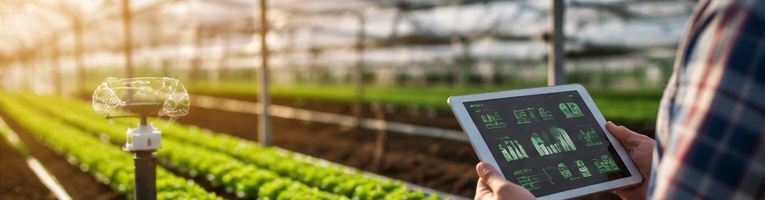
5 SDGs · 9 research topics View Track Details
No track matches that search. Try a broader keyword such as “energy”, “water” or “policy”.
Before You Submit

Submission Guidelines

Abstract requirements on the left, full paper requirements on the right.

Abstract Submission Guidelines

7 sections
01

Length

  • Abstracts should be between 200–300 words.
  • Longer abstracts may be truncated during review.
02

Structure

  • Title: Clear, concise, and informative (max 20 words).
  • Authors & Affiliations: Full names, institutional affiliations and email addresses.
  • Body: Must include:
    • Background / Objective – Why the study was conducted.
    • Methods – Brief description of approach or experiment.
    • Results – Key findings (quantitative or qualitative).
    • Conclusion / Implications – Significance and contribution.
03

Keywords

  • Provide 3–5 keywords for indexing and classification.
04

Formatting

  • Use Times New Roman, 12 pt, single spacing.
  • Avoid figures, tables, or references in the abstract.
  • Write in English only.
05

Originality

  • Abstracts must represent original, unpublished work.
  • Plagiarism or duplication will lead to rejection.
06

Review Process

  • Abstracts will be peer-reviewed by the scientific committee.
  • Acceptance will be notified via email.
07

Submission

  • Submit abstracts through the conference submission portal.
  • Ensure all co-authors approve the submission.

Full Paper Submission Guidelines

7 sections
01

Length

  • Full papers should be between 4,000–6,000 words (excluding references).
  • Maximum of 10–12 pages in standard conference format.
02

Structure

  • Title: Clear, concise and informative.
  • Authors & Affiliations: Full names, institutional affiliations and email addresses.
  • Abstract: 200–300 words (as per abstract guidelines).
  • Keywords: 3–5 keywords.
  • Main Body:
    • Introduction – Background, objectives and significance.
    • Literature Review – Relevant prior work.
    • Methodology – Detailed description of methods, models or experiments.
    • Results – Findings with figures / tables.
    • Discussion – Interpretation, implications and limitations.
    • Conclusion – Summary and future scope.
  • References: Follow APA / IEEE style (depending on publisher).
03

Formatting

  • Use Times New Roman, 12 pt, single spacing.
  • Margins: 1 inch on all sides.
  • Figures and tables must be numbered, captioned, and cited in text.
  • Equations should be numbered sequentially.
04

Originality & Integrity

  • Papers must represent original, unpublished work.
  • AI-generated content (text, figures or data) is strictly prohibited. Authors must ensure that all content is human-authored and verifiable.
  • Plagiarism or duplication will lead to rejection.
  • Similarity index must be below 15% (Turnitin / iThenticate).
05

Review Process

  • All submissions will undergo double-blind peer review.
  • Review criteria: originality, technical soundness, clarity, relevance and contribution.
  • Authors will receive reviewer comments for revision if required.
06

Submission

  • Submit papers through the conference submission portal.
  • File format: MS Word (.doc / .docx) or LaTeX (PDF).
  • Ensure all co-authors approve the submission.
07

Publication

  • Accepted papers will be published in Scopus-indexed proceedings / journals (depending on conference arrangements).
  • Selected papers may be invited for special issues in reputed journals.

In Case You Haven’t Heard From Us Yet

  • Add emails from gogreensummit@bioleagues.com to your safe sender list so you don’t miss important conference communications.
  • If you don’t receive an acknowledgment or follow-up within 48 hours of your registration or inquiry, contact the Conference Coordination Team at gogreensummit@bioleagues.com.
  • Before reaching out about a missing communication, kindly check your Spam / Junk folder.
  • Provide a valid mobile number in your registration form and abstract submission for timely updates and correspondence.
Choosing a Track

Not sure where your paper belongs?

Pick the session that matches the primary contribution of your work. The technical committee reviews the fit and may move your paper to a closer session – you will be told if that happens. Interdisciplinary submissions are welcome across all eight tracks.

Found your session?

Submit your abstract and join an international research community working on climate resilience.

Chat with us
Join as Listener Join as Presenter